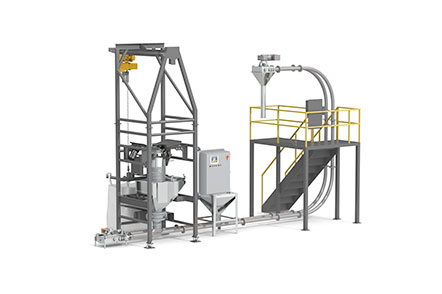
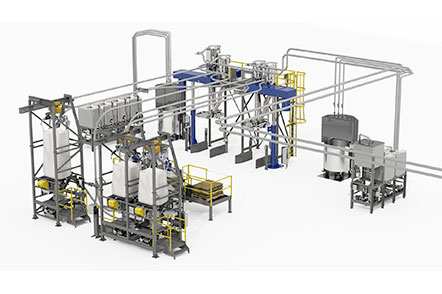
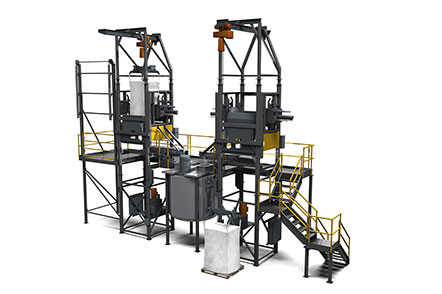
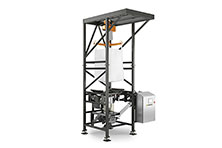
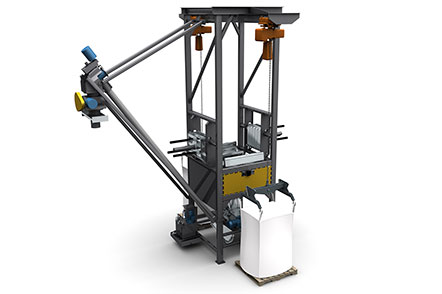
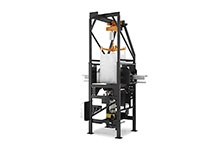
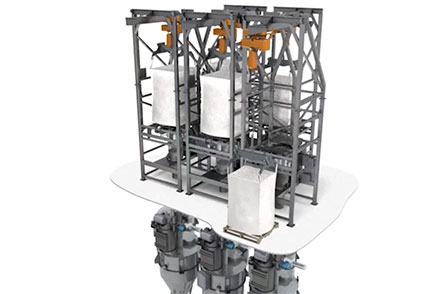
Sanitary Bulk Bag Dischargers
Recognizing The Value of Sanitary-specific Design
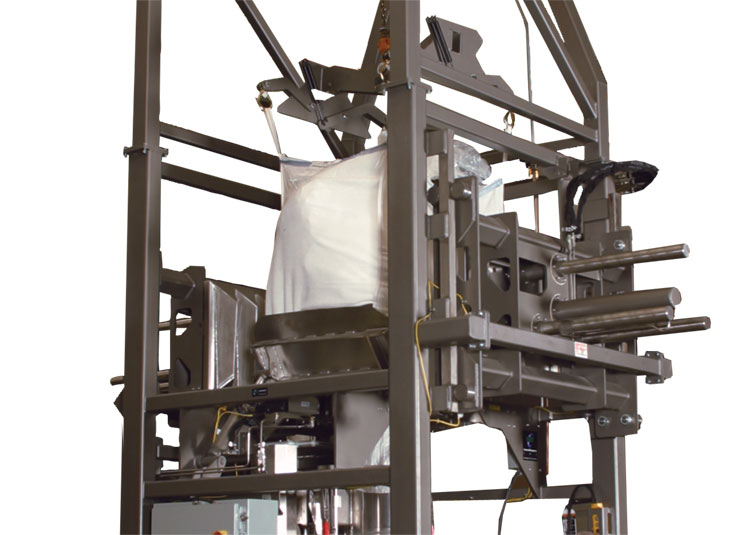
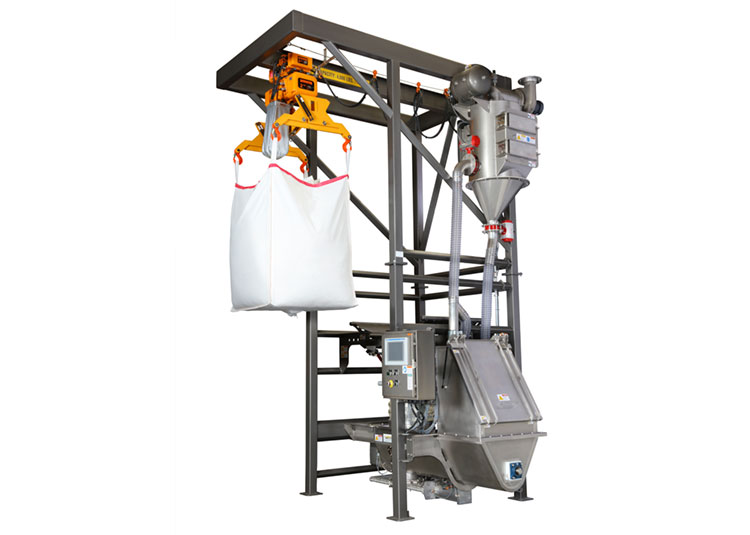
The variables related to sanitary bulk bag unloader design are many, including: regulatory matters, the plant environment, material characteristics, and equipment and controls integration. Yet, with so many variables, two constants remain in the application-specific design and construction of NBE sanitary bulk bag unloaders, they are: not one variable will be compromised; and the system must provide optimal compliance contribution (OCC) to the sanitary operation, by enabling:
- Reduced cleaning times
- Improved labor efficiency
- Minimized consumables use
- Prevention of product contamination
- Protection of operations and inspection personnel
- Repeated validation and inspection compliance
- Alignment with sanitary facility design principles
| > download NBE Sanitary Systems Data & Specifications Guide Book |
| > request a sanitary bulk bag unloader quote from NBE |
| > locate an NBE sales rep |
Producing Specifications Beyond the Standards
Materials of Construction
The materials of construction specified for use in the production of NBE sanitary bulk bag unloaders are vital elements in the optimal compliance contribution (OOC) provided by these systems. From the structural framework to the components and connectors, NBE sanitary bulk bag unloader materials of construction help to prevent contaminant buildup, reduce cleaning times, and extend maintenance cycles.
Contaminant Protection & Abatement
Whether yours is a single- or multi-product facility, product contamination threats are constant. The sanitary-specific design and construction of NBE sanitary bulk bag unloaders provides inherent contaminant prevention and abatement features that will protect product and aid in attaining optimal compliance contribution (OCC).
| > Closed-cycle Contaminant Prevention System |
| > Structural Framework Design Reduces Material Buildup |
| > Cut-out Internal Corners Prevent Accumulation Points |
Equipment Cleanability
Enabling a reliable and repeatable cleaning process is a key, pre-production design consideration that goes into each NBE sanitary bulk bag unloader. The sanitary applications expertise of the NBE sanitary bulk bag discharger engineering and manufacturing staff ensures cleaning times can be minimized and the state of validation can be extended.
| > Continuous-weld Seams Ground to No. 4 Finish |
| > Enclosure Stand-off Design Eliminates Internal Angles |
| > Material Release Openings In Joints and Internal Angles |
| > Accessible Utility Lines and Hoses |
Equipment Accessibility
NBE sanitary bulk bag unloaders are engineered and built to the specific cleaning and inspection accessibility requirements of each sanitary application. Re-purposed, industrial units may be accessible by definition; but NBE sanitary bulk bag unloading systems are accessible by design. If you’re held accountable, specify NBE and make sure your bulk bag dischargers are safely, efficiently, and thoroughly accessible.
| > Pneumatic Systems Protected, Accessible for Cleaning |
| > Tool-less Access to Enclosed, Guarded Areas |


To improve material release during operation, and to simplify cleaning, many product contact surfaces and components are polished to a 32 Ra.
Product contact areas, and adjacent structural elements are constructed of Type 304-2b stainless steel, with continuous-weld seams ground to a No. 4 finish.
Temperature-, pressure-, and corrosion-resistant materials are specified to speed cleaning and validation; without compromise to sanitary performance.
When carbon steel is a required specification, the surfaces are sandblasted, fabricated with smooth-ground weld seams, then primed and painted with FDA-approved epoxy paint.
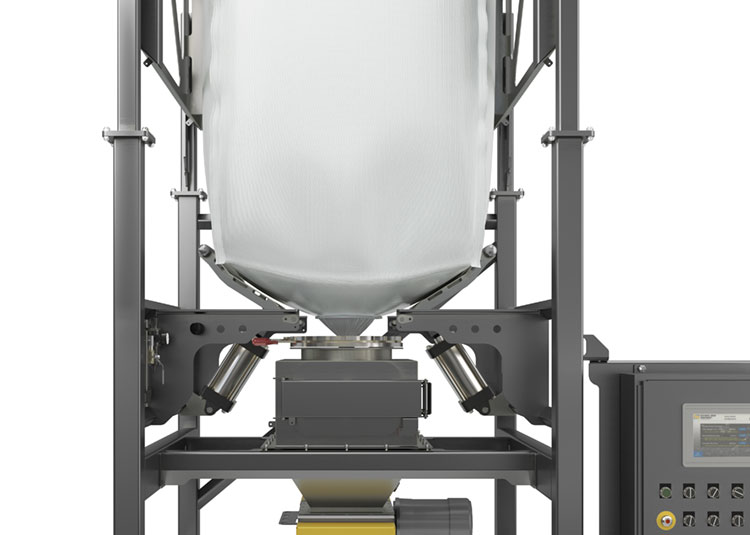
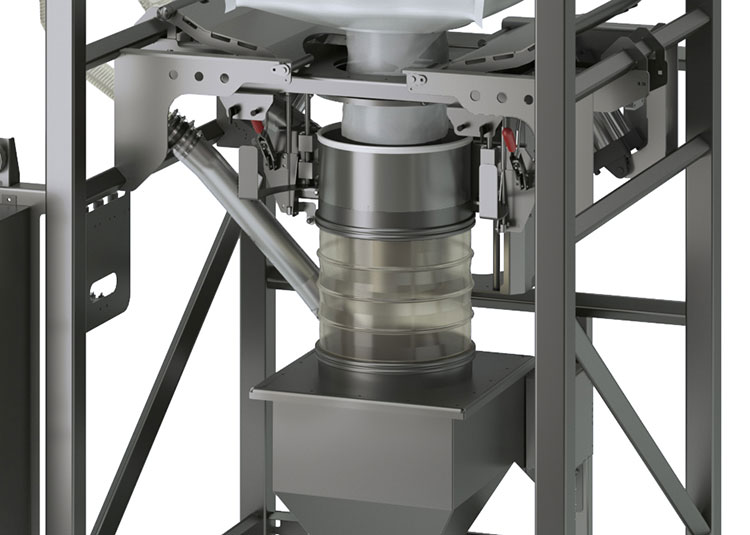
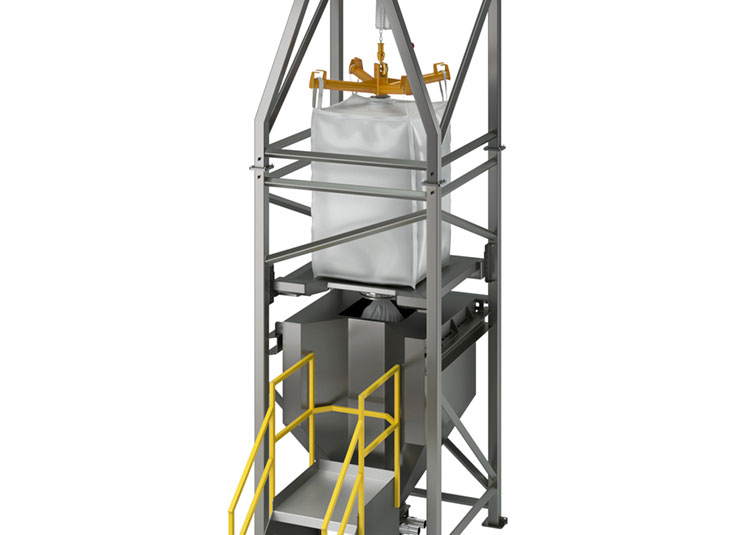
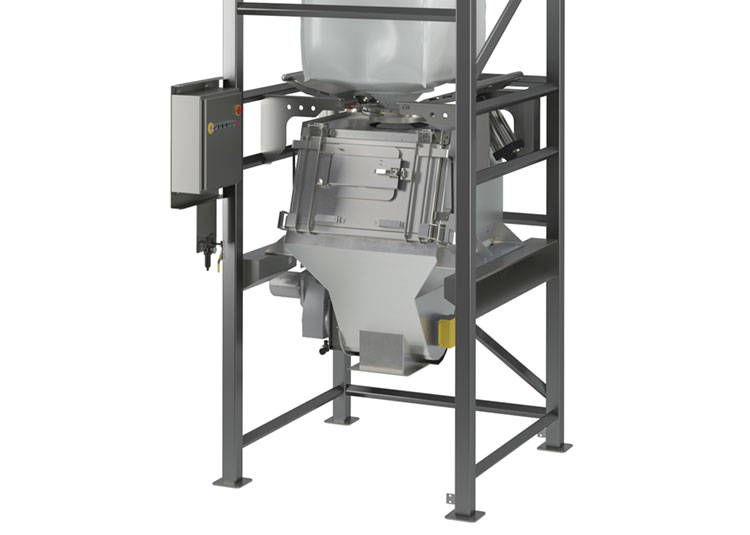
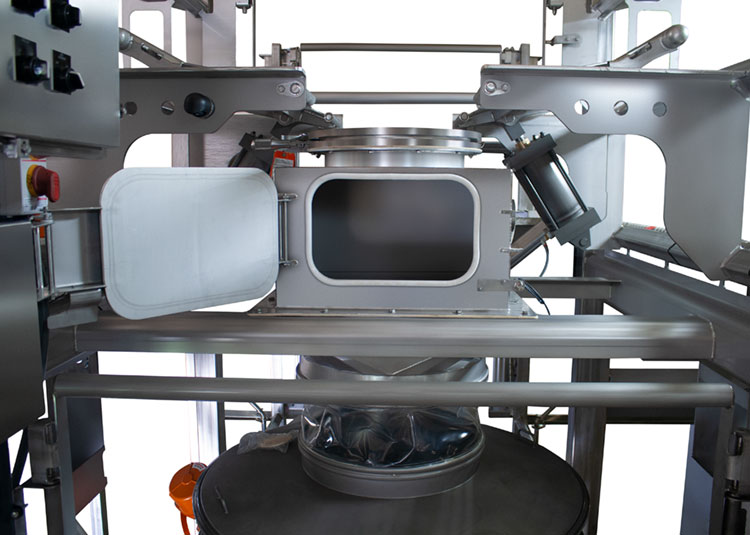
The NBE E3® bag spout interface secures and encloses the bag spout within a sealed containment cylinder to protect personnel from migrant dust and product from contaminants.
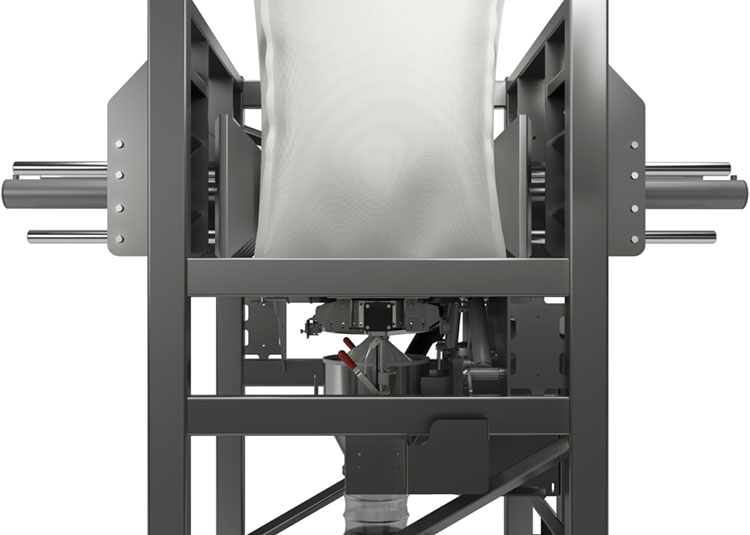
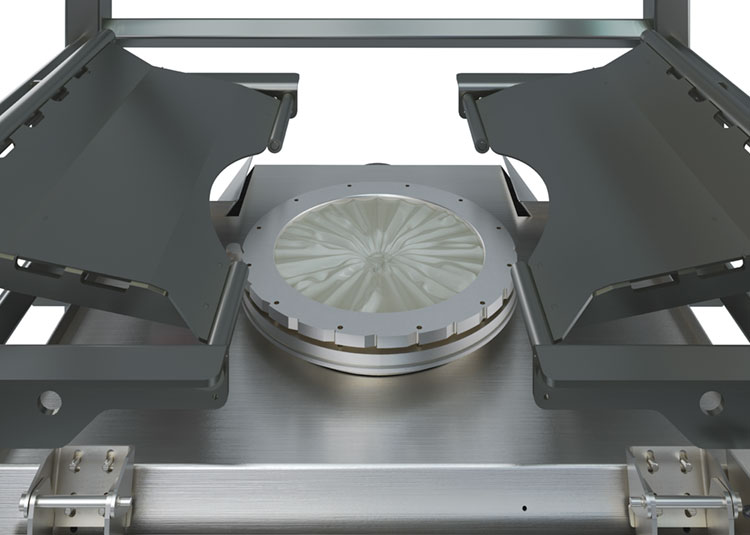
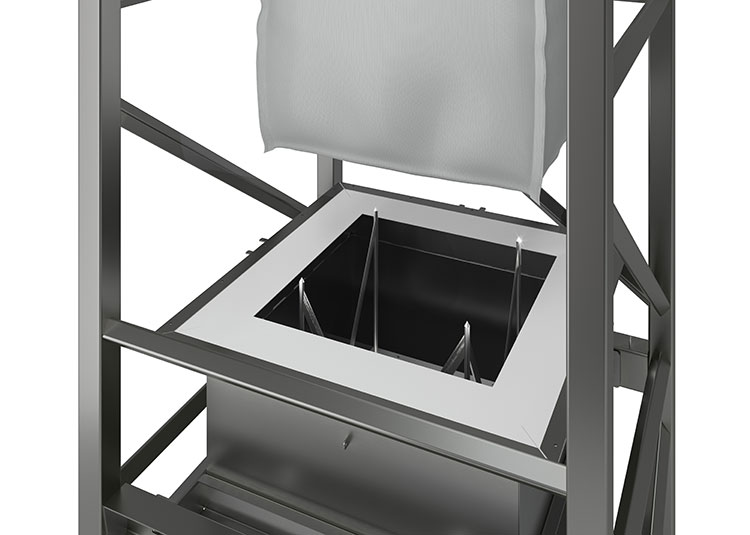
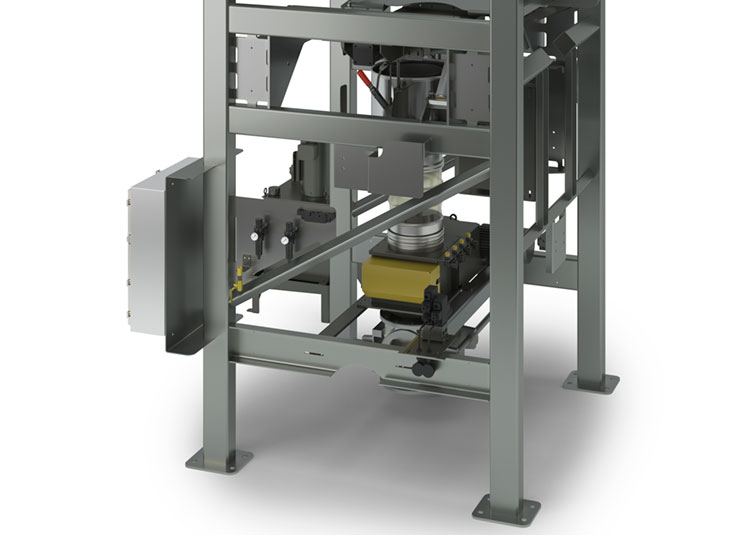
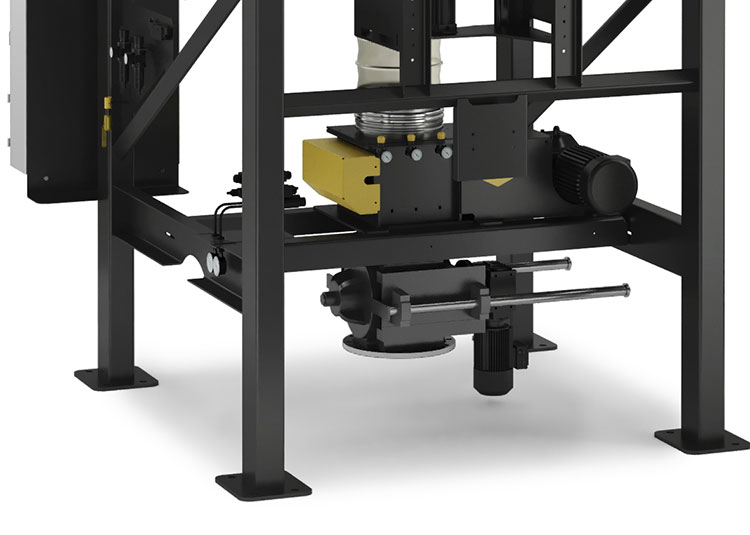
Structural framework beams and cross members are angled away from product zones, or turned 45 degrees to horizontal, to aid in preventing material accumulation and pooling of liquids.
To reduce contaminate accumulation internal corners are cut out from framework points to eliminate areas difficult to access where materials or liquids could harbor.
To prevent microbial accumulation in the weld seams, welds in product zones and adjacent areas are ground to a No. 4 finish, then hand burnished to eliminate pits, dimples, and crevices.
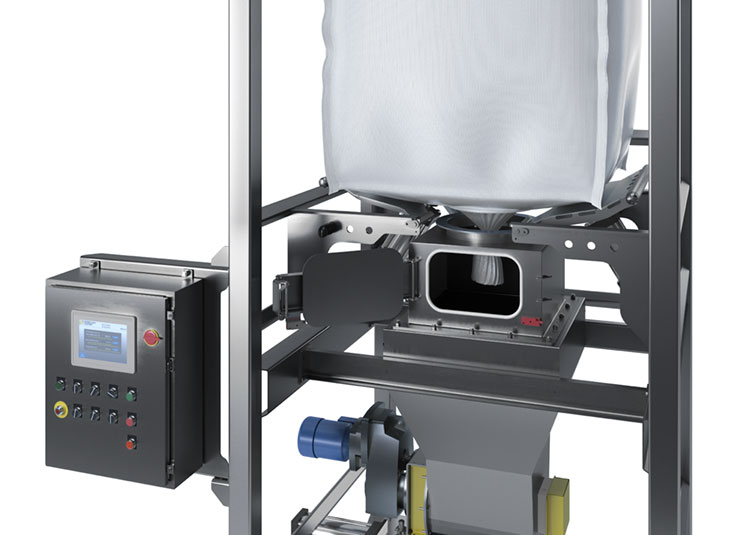
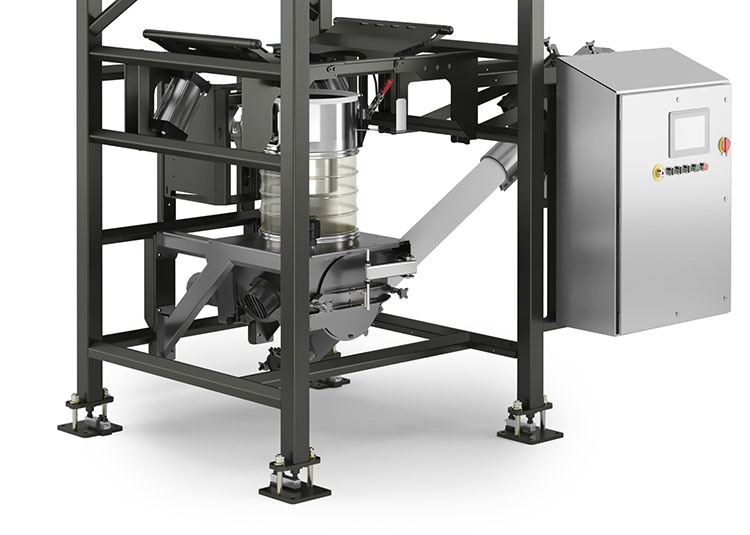
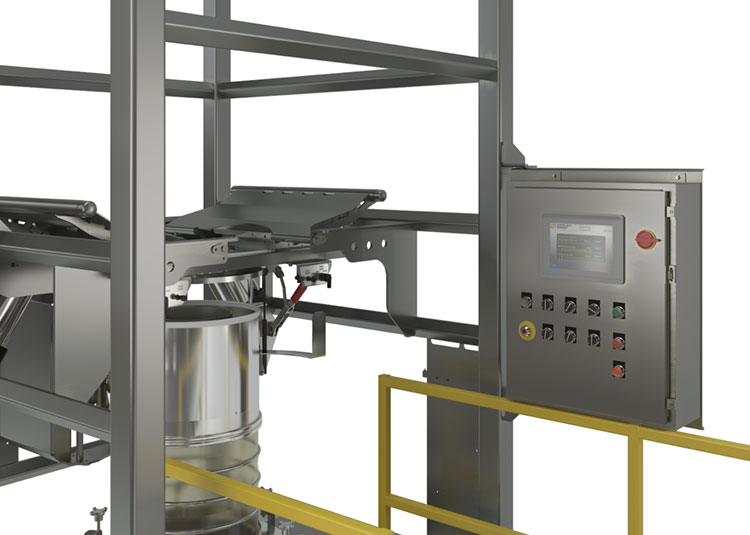
To simplify cleaning, validation, and inspection, control enclosures are suspended away from the framework using polished, precision stand-offs to eliminate internal angles.
In product contact, and non-product contact zones, attention has been given to integrate material release openings into joints and angles to facilitate gravitational removal of material residue.
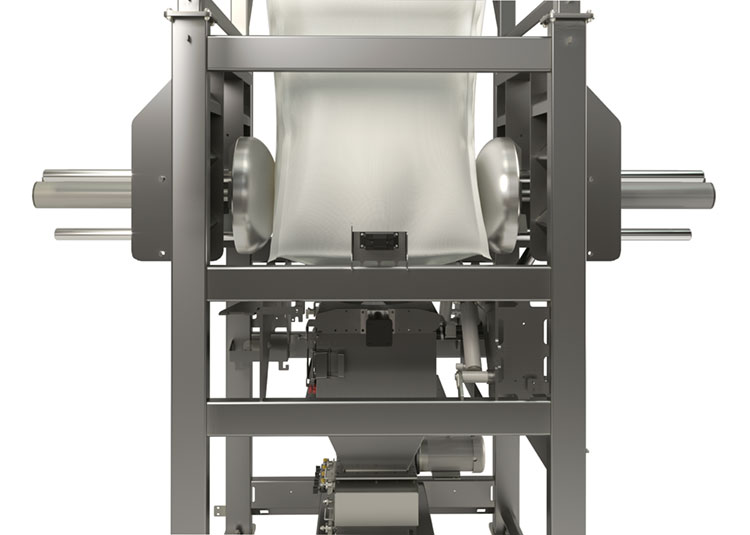
Utility lines and hoses are managed without use of frame-penetrating fasteners or basket-style raceways and enable fast and thorough cleaning of utility surfaces and adjacent structures.
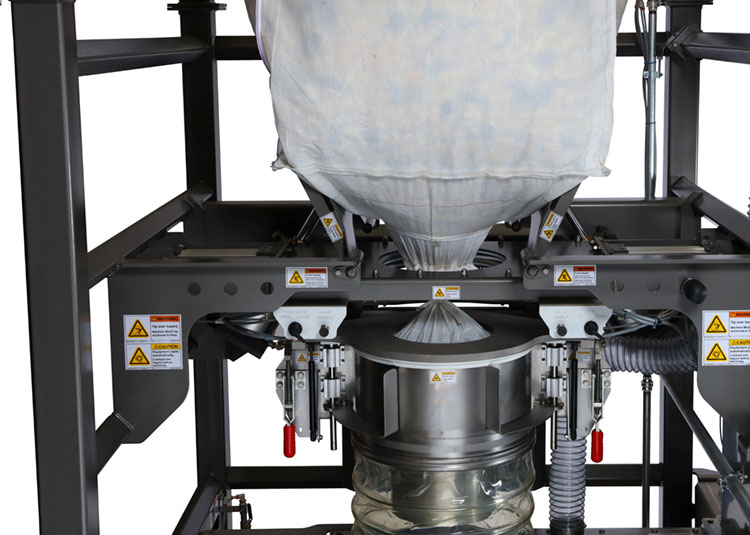
Pneumatic systems are protected from migrant dusts by easily removable covers designed and fabricated to prevent material buildup and to speed access for cleaning and inspection.
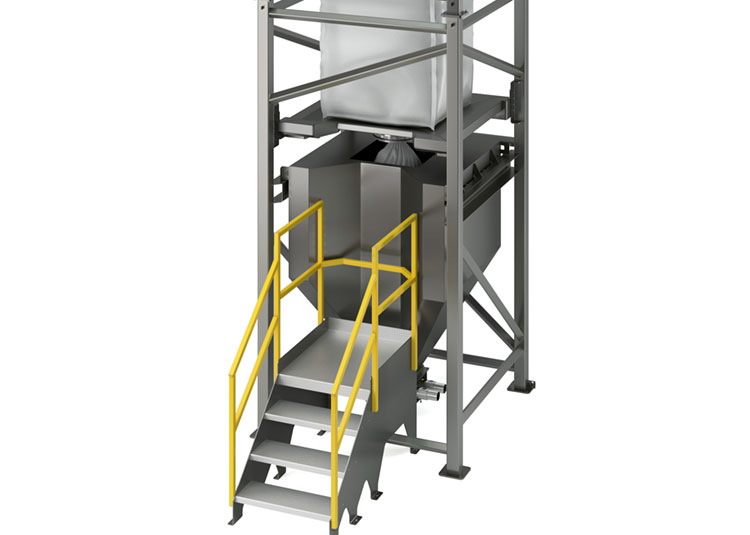
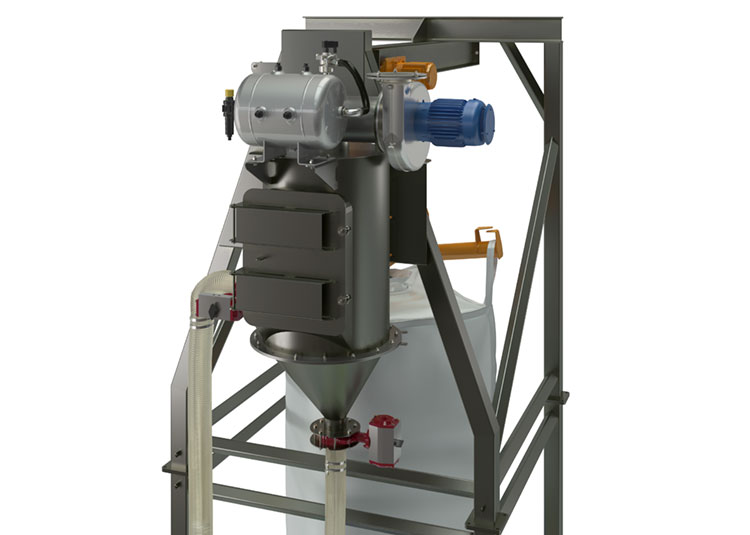
Hopper and enclosures enable easy access for cleaning and inspection, while being properly sealed against entry of foreign materials or release of migrant contaminants.