Drum & Container Dischargers
Container Dischargers: In-Use Advantages
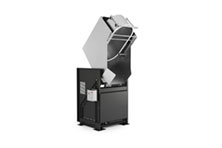
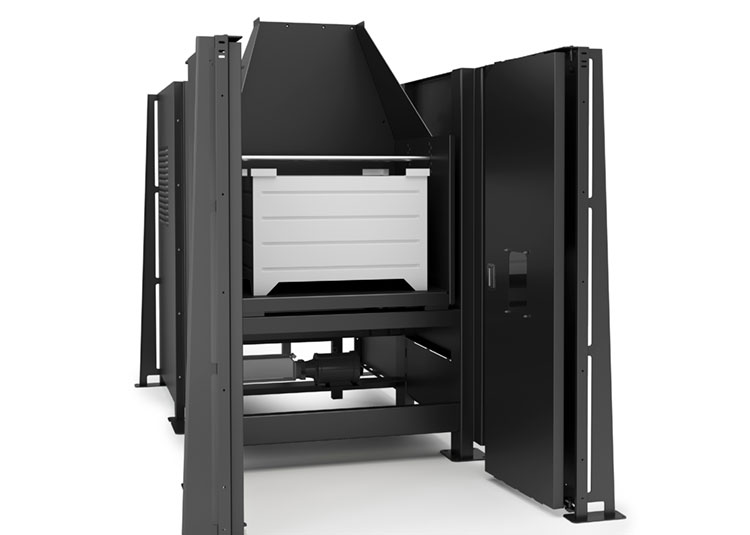
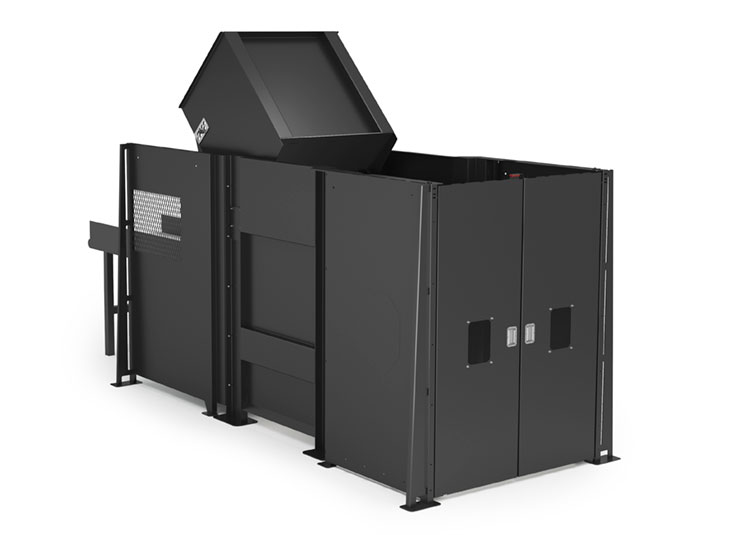
Container dischargers are also commonly known as tote dumpers, box dumpers, bin dumpers, drum dumpers, gaylord dumpers, or fiber drum dumpers. NBE drum and container dischargers allow for the controlled unload and discharge of dry materials from hard-to-handle loads while reducing manual labor. NBE drum, bin, box, barrel, or gaylord box dumpers consistently provide a reliable and repeatable material supply as your system demands. From the simplest container dumper to a completely automatic lift and dump container dumper material processing system, the Real Results obtained by NBE’s customers include: increased throughput and productivity; improved controls integration; reduced operating costs in direct labor and material losses, complete container discharge, and reduced material contamination.
Container Dischargers: Features & Integration Guide
Drum & Container Discharger Configurations:
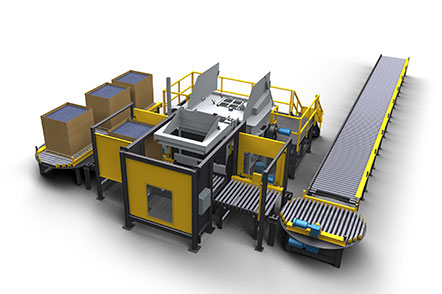
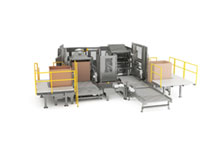
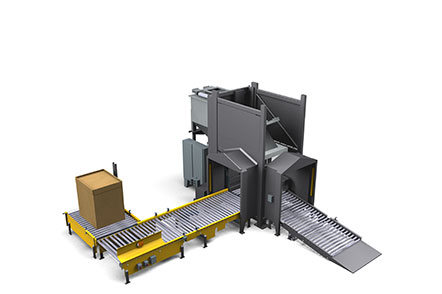
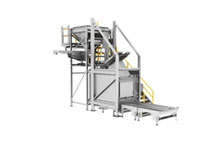
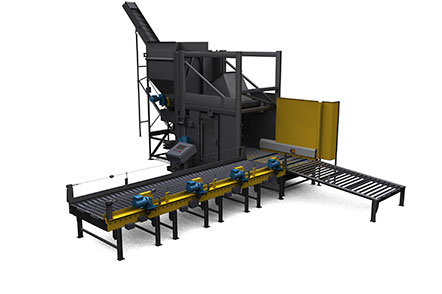
NBE tote dumper, gaylord box dumper, or drum dumper systems can be built to handle virtually any type of tote, drum, barrel, or box, and designed to fit any dry bulk material processing plant layout or equipment configuration. Additionally, for systems where space limitations do not allow the dumper to be loaded from the front side, NBE has developed side-load hydraulic discharge systems.
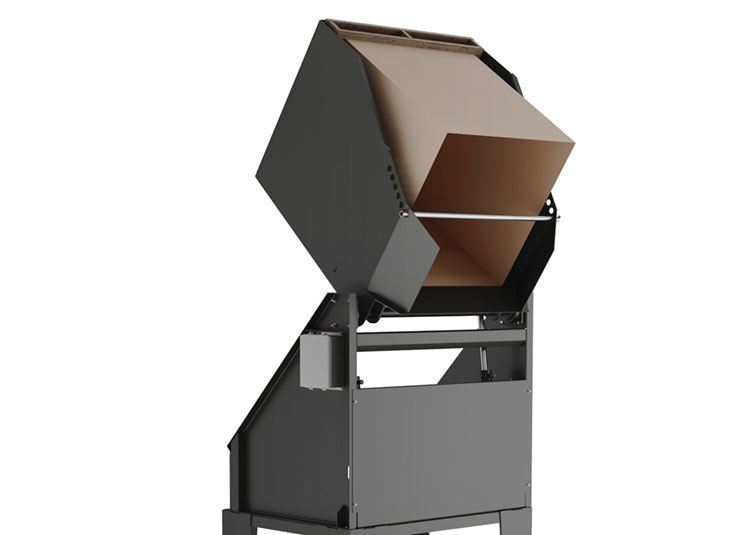
> Open Bucket Container Dischargers
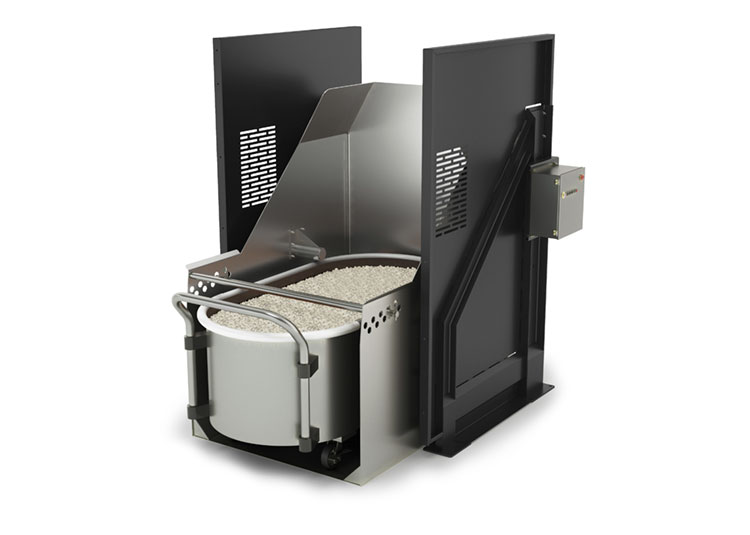
Open Bucket Container Dischargers
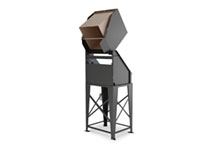
Open bucket container dischargers provide economical solutions for unloading non-dust-generating materials from any type of bin, box, or tote.
|
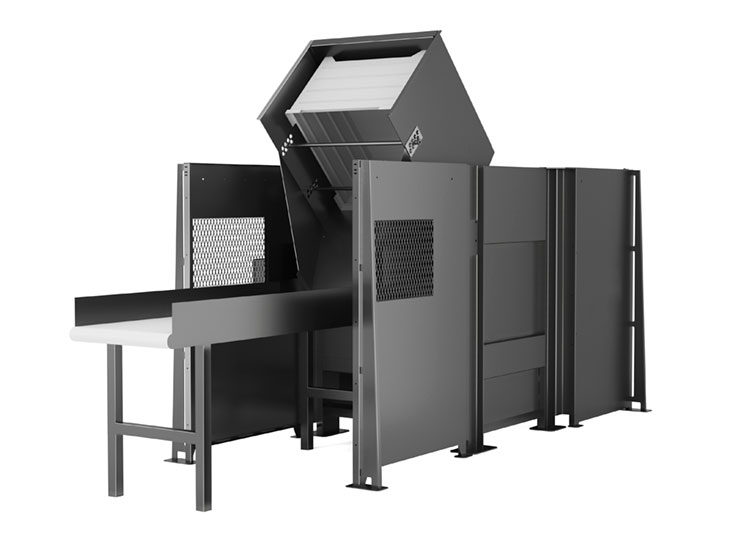
> Sealed Container Dischargers
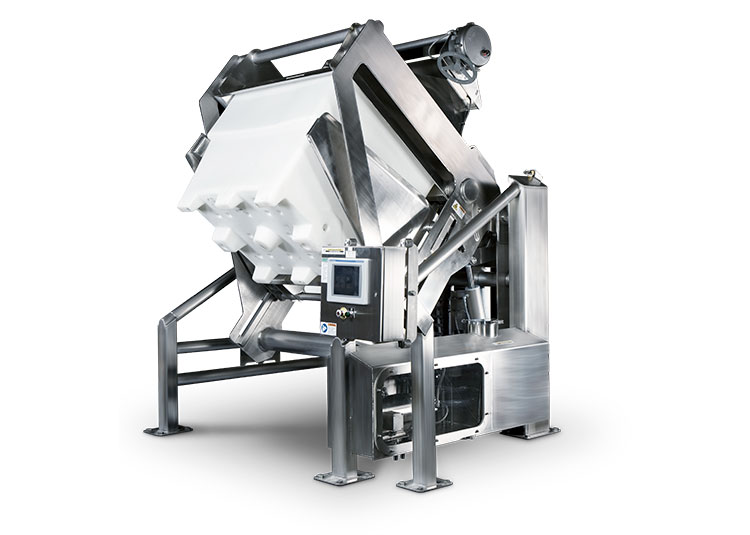
Sealed Container Dischargers
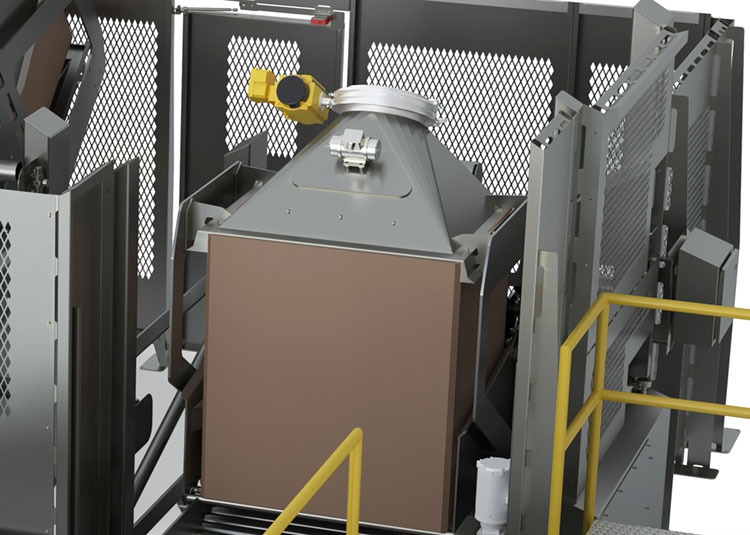
Sealed and enclosed container dischargers meet the most stringent dust control requirements. Hydraulic sealed container dischargers eliminate foreign material contamination from pallets or containers getting into the downstream process.
|
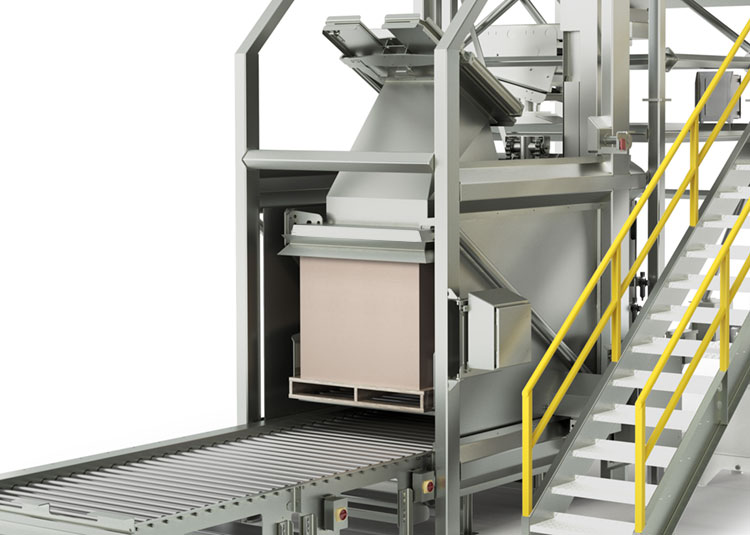
> Direct Discharge Systems
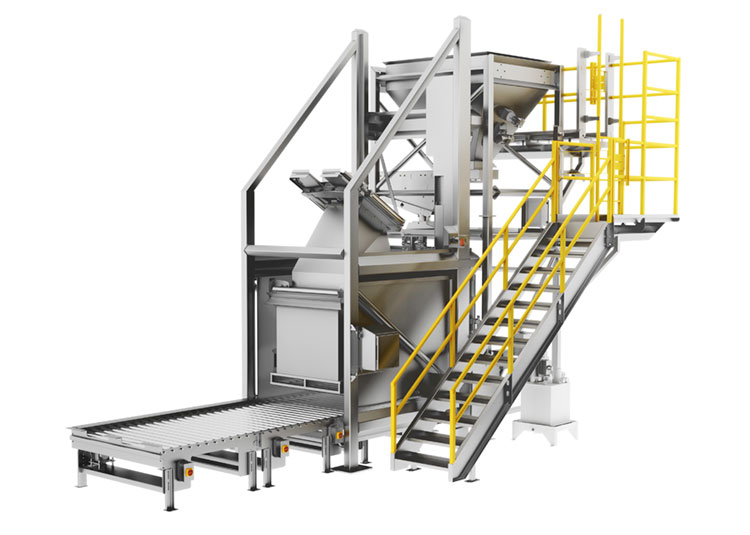
Direct Discharge Systems
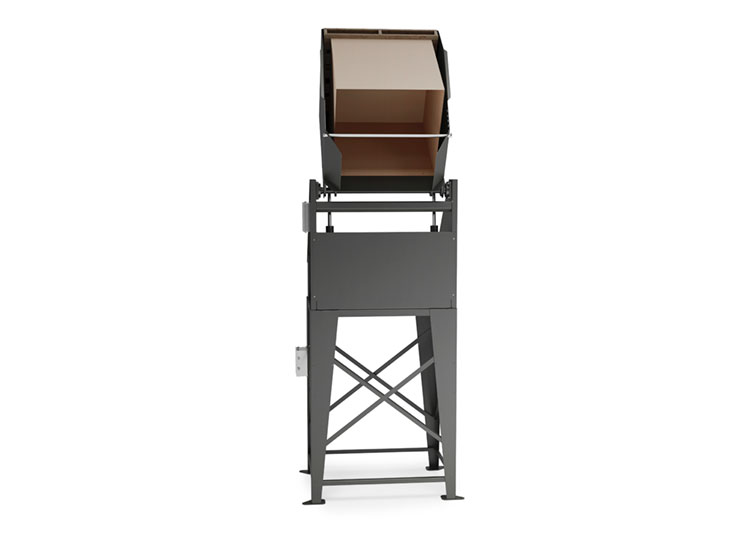
Direct discharge dumper systems safely discharge dry materials from a wide variety of bulk containers, including fiber drums and boxes, into storage bins or process equipment. When the drum or container can be loaded above floor level, support stands are available for a more economical solution to dump heights that exceed 60 inches.
|
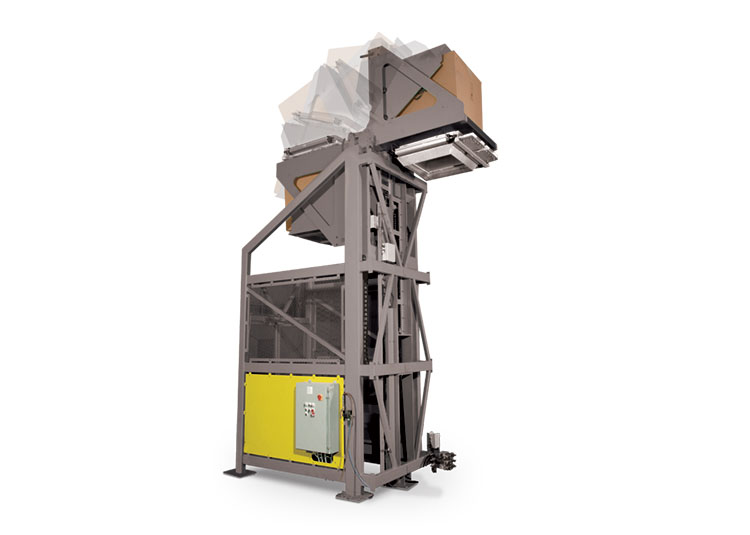
> High-lift Container Dischargers
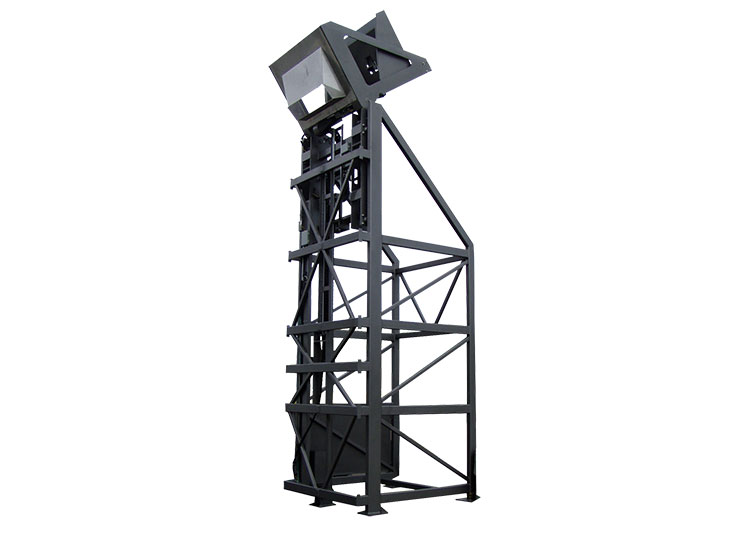
High-lift Container Dischargers
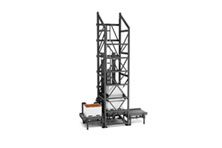
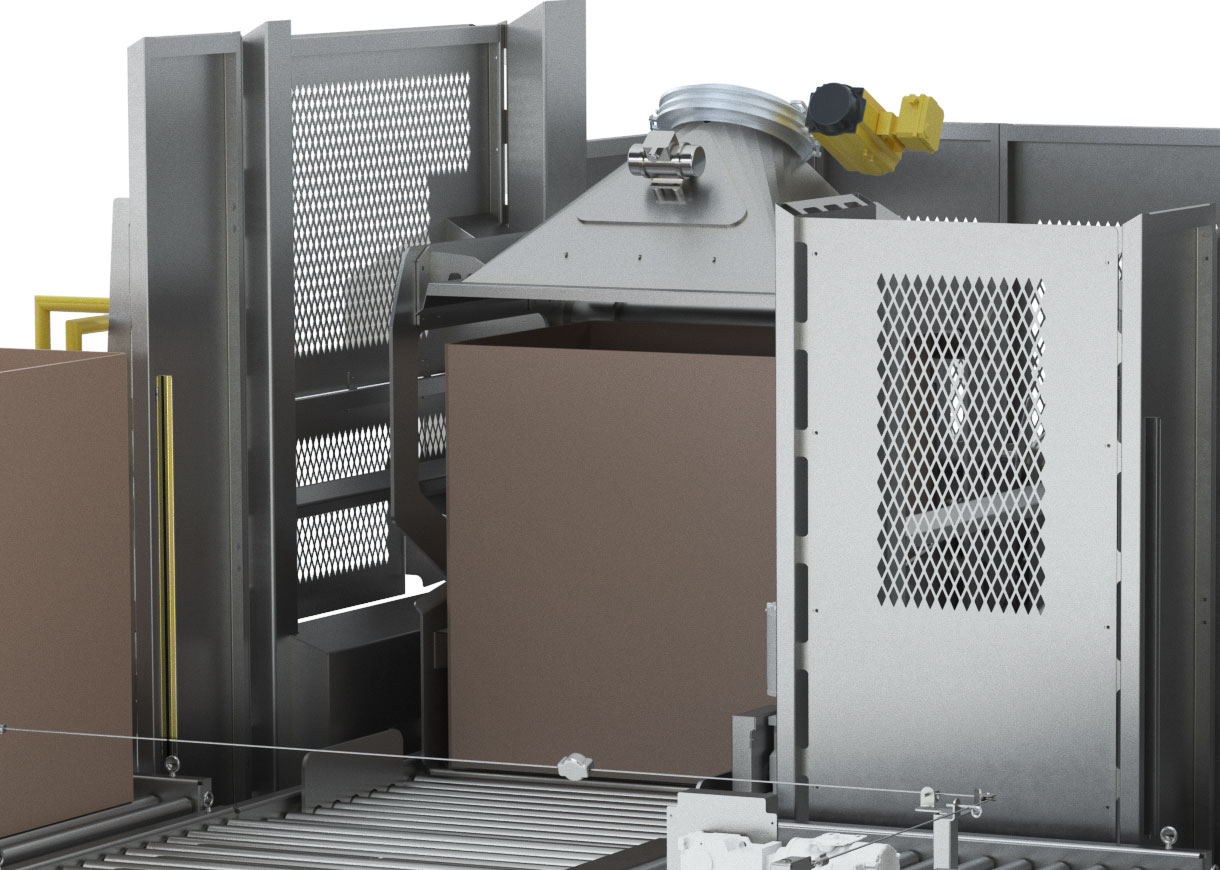
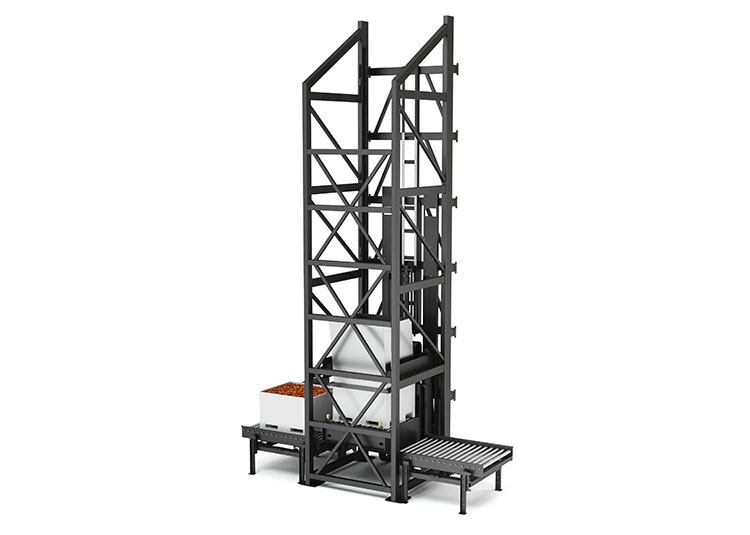
Lift-and-dump hydraulic dischargers, also known as tote dumpers, safely raise and unload bulk materials from floor level into elevated storage bins or process equipment.
|
Container Discharger Framework Designs:
All NBE container dumper frames are constructed to withstand the harshest of processing and packaging plant environments and demanding duty cycles; including those requiring FDA, 3-A, USDA or international regulatory compliance. NBE tote dumper and container dumper capacities range from 750 pounds to 16,000 pounds, with higher capacities available.
> General Industrial Construction
General Industrial Construction
The support framework is constructed of C-channel, I-beam, angle iron, tubular steel, or other heavy duty structural steel that is stitch and continuously welded to provide superior structural integrity.
|
> Sanitary / Hygienic Construction
Sanitary / Hygienic Construction
This sanitary container dumper is specifically designed for processing applications where compliance with FDA, USDA, 3-A, BISSC, or international standards is required. NBE sanitary bulk tote dumpers comply with process protocols where 3-A Accepted Practices or other cGMP are necessary. The NBE sanitary container dumper design includes CIP features, such as: 304-2b construction, continuous-weld seams ground to a No. 4 finish, and tool-less, quick-clean component designs to simplify sanitizing and inspection.
|
> Wash Down Construction
Wash Down Construction
The support framework is tubular construction with all ends capped, no holes protruding to the inside of any tubing. Angled or rounded surfaces are utilized to promote drainage where structurally possible, and pockets where material or water accumulation could occur are eliminated. Absolutely no angle iron, C-channel, or I-beam shapes are used in the construction of the equipment.
|
> Lift and Discharge
 The containers are hydraulically raised to their discharge point with cam rollers traveling on track bars to guide the lift and provide the smoothest operation possible. > View Detail
Lift and Discharge
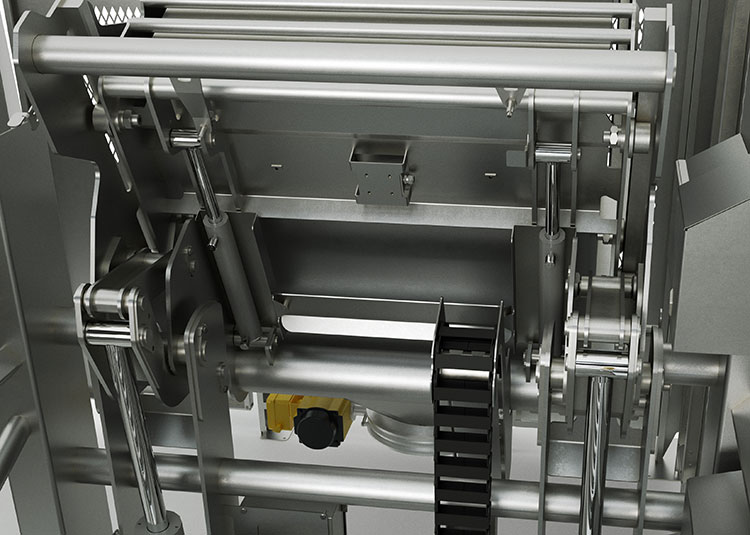
The containers are hydraulically raised to their discharge point with cam rollers traveling on track bars to guide the lift and provide the smoothest operation possible. This eliminates the potential for side-to-side racking occurring in other designs. All moving hydraulic hose, pneumatic tubing, and electrical sealtite are contained in flexible cable carriers to protect them during operation. A mast cylinder guide race stabilizes the cylinder rod eliminating potential damage to the rod and seal.
|
Bucket and Lift Carriage Designs:
Lift carriages for NBE container tote dumpers and drum dumpers are offered in several configurations to match the customer's material processing and handling needs. Floor load styles allow bulk containers, such as drums, bins, boxes, or totes to be loaded into the lift and dumper container carriage with casters, a pallet jack, or forklift truck.
> Lift and Carriage Detail
 Lift carriages are offered in several available con-figurations to match the customer’s process. > View Detail
Lift and Carriage Detail
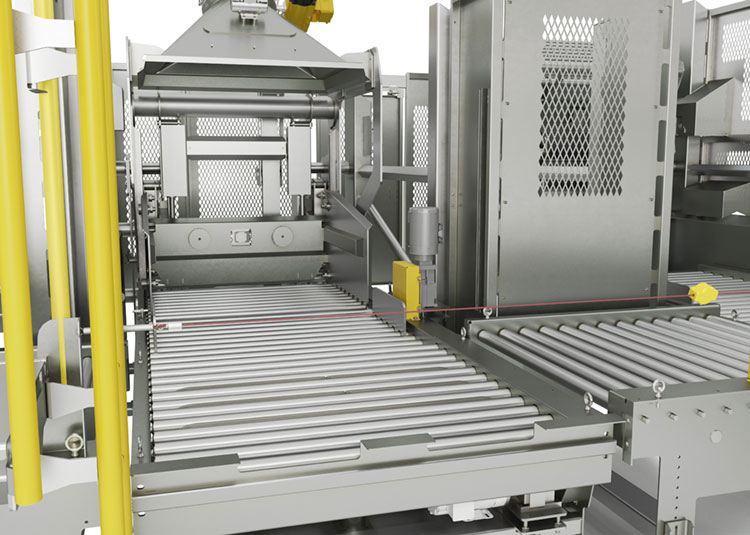
Lift carriages are offered in several configurations. Floor-load styles enable containers to be loaded into the carriage with casters, a pallet jack, or fork lift truck. Fork lift styles enable containers to be loaded with a fork lift truck while eliminating metal-to-metal contact from the forks to the carriage base. Integral powered, or gravity roller conveyor, styles enable integration into indexing and accumulation conveyor systems. Additionally, conveyors can include chain transfer devices to transfer full or empty containers at right angles from their load position.
Pneumatic container centering devices position the container in the optimum position for sealing into the hood and achieving maximum discharge from the containers.
|
Discharge Hoods and Material Diverters:
Discharge hood shapes are custom designed for the customer's specific material containers and process application parameters. The primary design objectives of an NBE container discharger hood are contamination-free, dust-free, and complete material discharge.
> Hood Details
Discharge Hoods
Discharge hoods are constructed of various materials to meet the specific application requirements. Carbon Steel, 304, 316, and 6WL stainless steel are common materials of construction. Galvanized steel, ceramic-lined, and other custom alloys or coatings are also available.
Discharge hoods can include internal agitators and moveable grates to prevent material from bridging or ratholing in the hood, as well as devices to delump the material prior to discharging.
Discharge hoods can include material sensor switches to indicate when the container is completely empty of its contents.
Discharge valve configurations include round or square pneumatic slide gates, rotary valves, as well as open funnel discharges.
|
> Material Diverters
Material Diverters
Material diverters direct the material into storage hoppers and downstream equipment while eliminating the potential for spillage and product loss.
|
Safety Cage and Systems:
Standard machinery safety cage options include 2-sided safety caging panels constructed of sheet steel with polycarbonate view windows, and cut-outs for discharger equipment maintenance purposes.
> Safety Cages
Safety Cages
Four-sided safety cage completely surrounds the discharger and has hinged doors that are electrically interlocked with the controls to prevent operation if the doors are opened.
|
> Light Curtains
Light Curtains
Light curtains eliminate the need to open and shut safety cage doors; disabling the equipment’s operation when the beam is crossed.
|
Container Discharger Control Systems:
Standard dumper controls are deadman style where the container dumper operator selects and holds the rotate/return, and/or raise/lower selector switches to operate the discharger equipment. The container dumper will stop, and hold, in any position when the switches are released.
> Control Enclosures
Control Enclosures
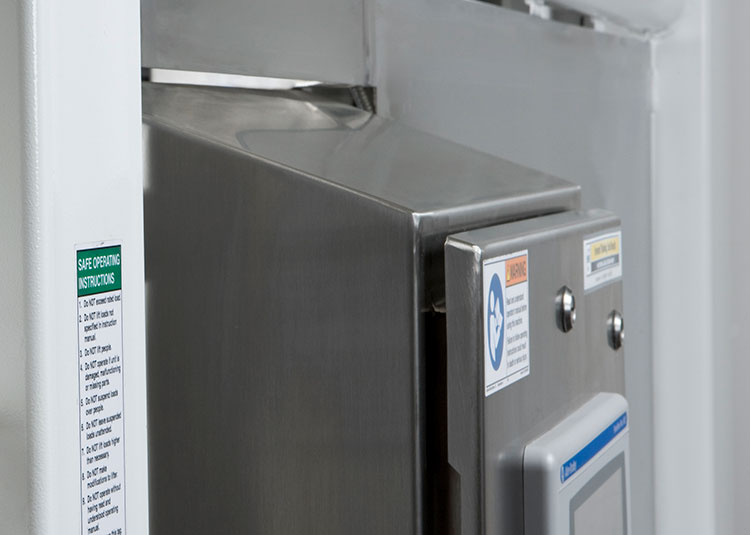
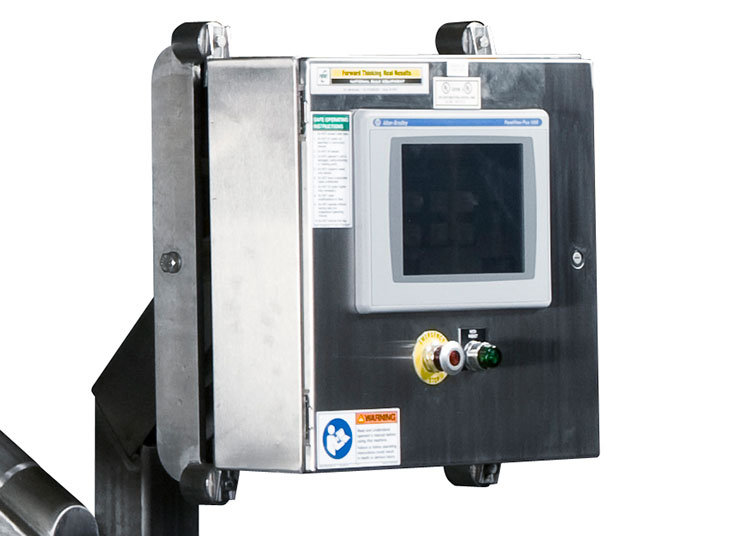
Control enclosures can be designed using NEMA 12, 4, 4x, 7, 9, and purged panels.
|
> PLC Programs
PLC Programs
Custom PLC control programs with touch screen HMI are available to automate the equipment (see Automate section).
|
> Device Wiring & Maintenance
Device Wiring & Maintenance
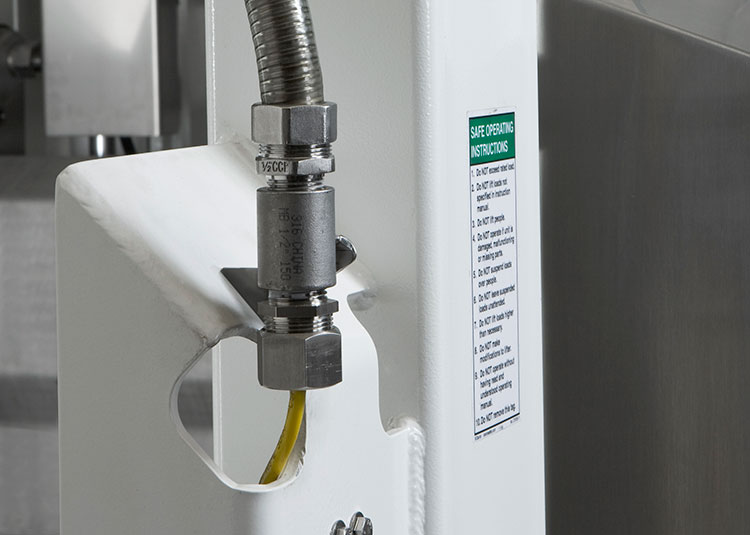
Systems are plumbed using flexible poly-tubing. The poly-tubing is color coded to help troubleshooting and maintenance of the equipment.
|
Hydraulic Systems:
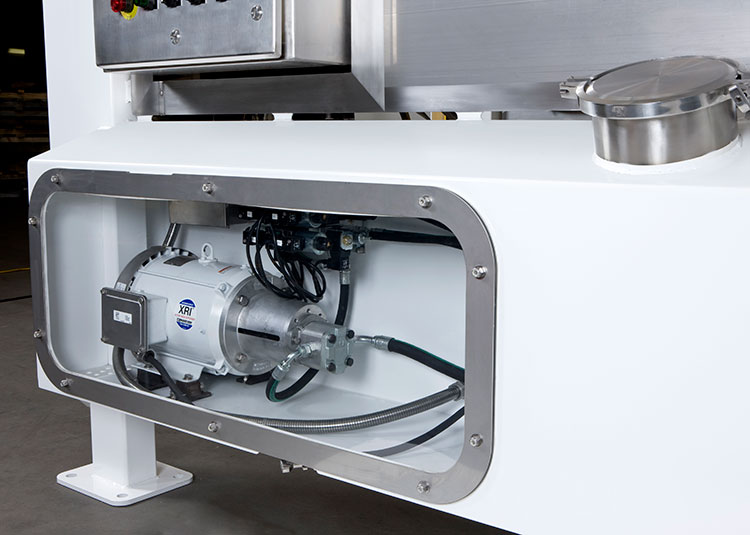
Power units and valve stacks are configured based on the dumper system's required cycles per hour and time per cycle. Hydraulic dumper systems can be constructed for general industrial unloader or dumper purposes, wash down duty, intrinsically safe, and explosion proof classifications.
> Power Unit
Power Unit
The power unit includes a large reservoir with a return line filter, sight gauge, and vented fill cap. Power units are mounted to the framework or can be skid mounted to include a drip-pan that helps prevent fluid from reaching the floor.
|
> Valve Stacks
Valve Stacks
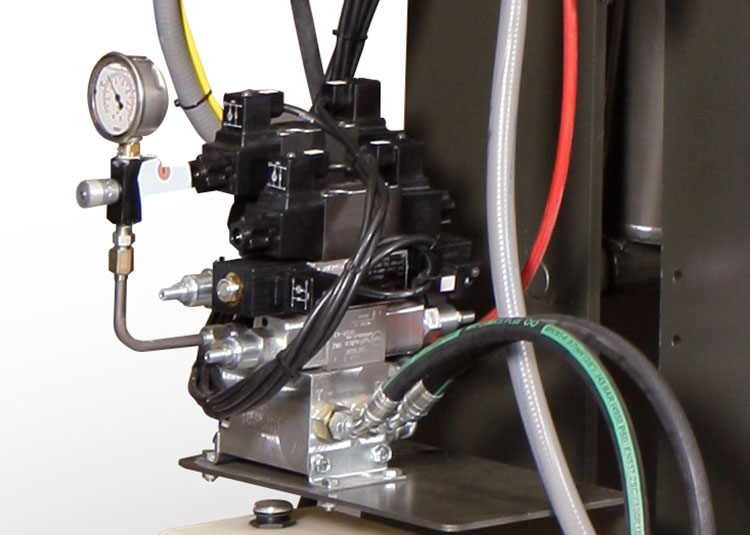
Valve stacks provide a range of adjustability to control the discharger lift and rotation speeds; as well as seal pressure. Seal pressure can be adjusted for different styles of containers to provide a very effective seal without damaging the containers.
|
> Seal Cylinders
Seal Cylinders
Seal cylinders are used to raise and seal the container into the hood on standard 2500 pound-capacity units.
|
> Rotational Cylinders
Rotational Cylinders
Rotation cylinders are used to invert the container into its discharge position.
|
> Mast Cylinders
Mast Cylinders
Mast cylinders are used to raise the container to an elevated discharge position on lift-and-discharge units.
|
> Rotolink™
Rotolink™
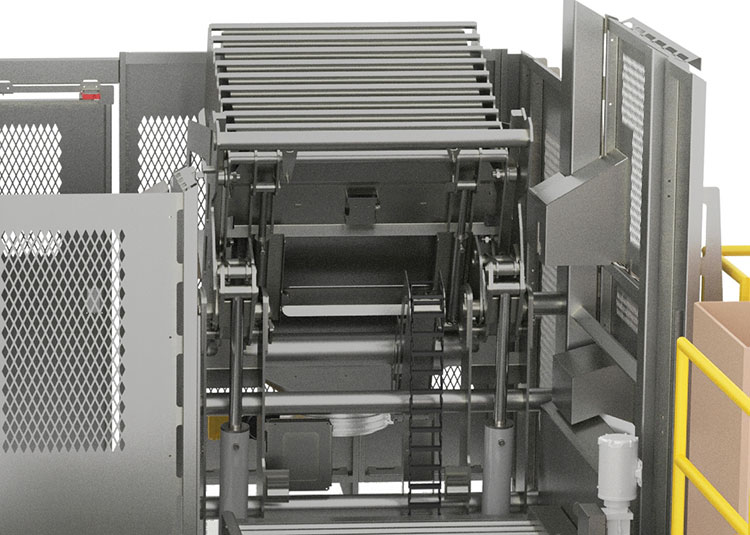
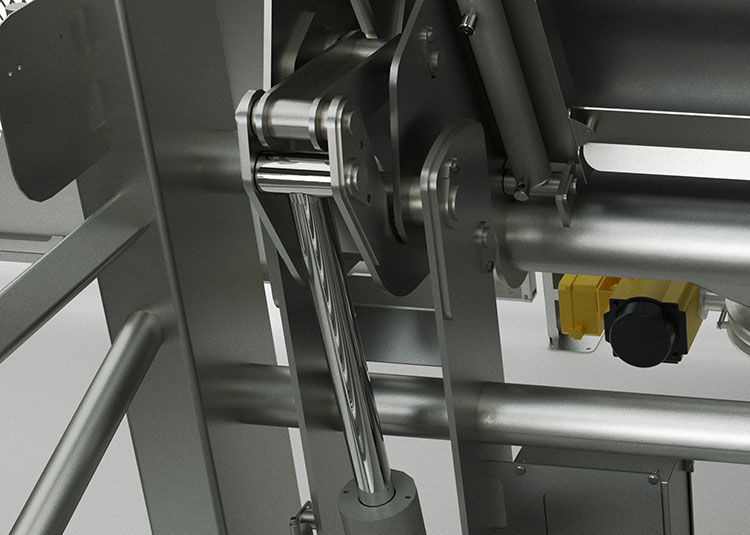
Rotolink™, a 3-bar mechanical linkage is designed to ensure smooth, continuous-speed operation for container rotations up to 180 degrees. The linkage geometry is calculated so that it optimally balances and achieves a consistent force and velocity in the raise and lower directions.
|
Pneumatic Systems:
The NBE container discharger equipment design includes a complete pneumatic control system for all pneumatic devices, including: pneumatic directional control valves, all necessary pneumatic filter regulators, and a single supply connection complete with a pneumatic, bleedable lock-out ball valve.